What is a Dual Plate Check Valve?
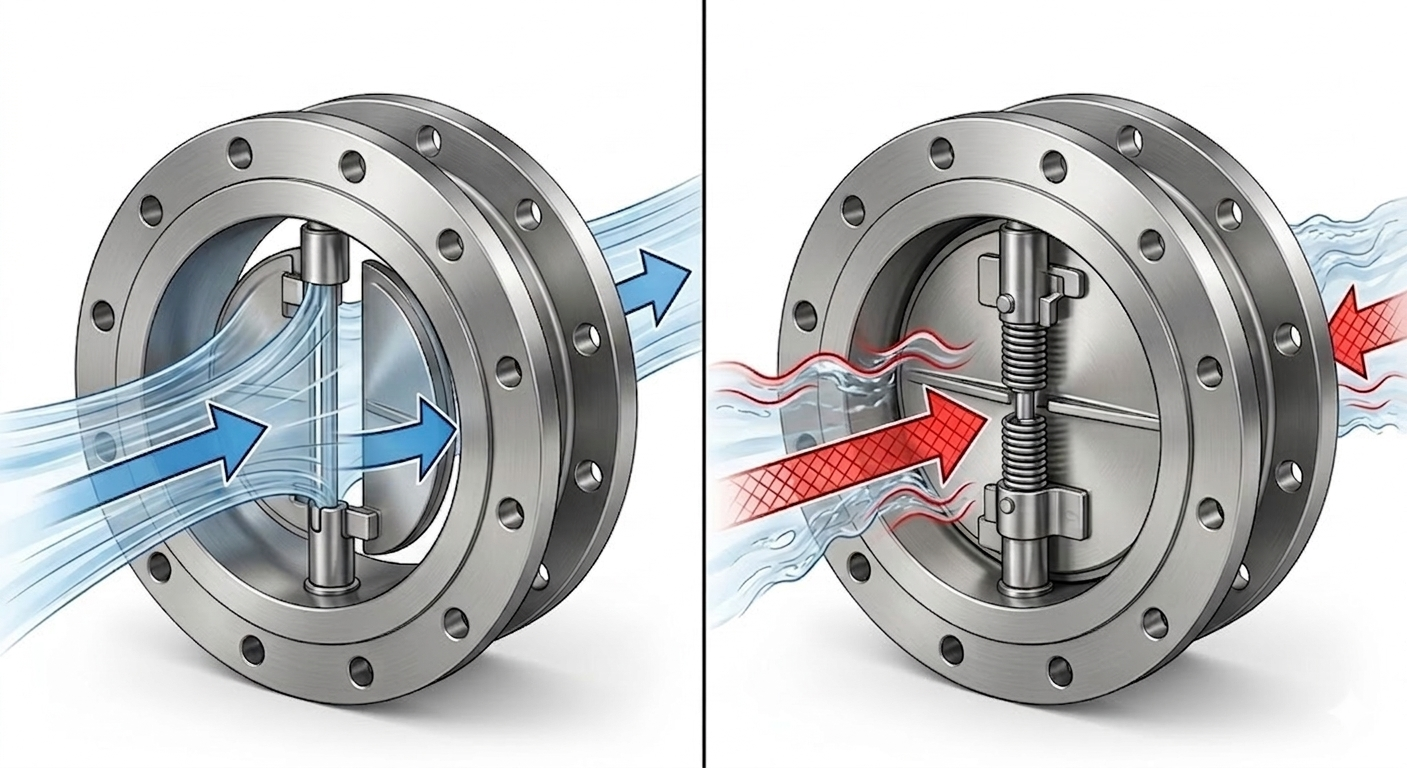
A Dual Plate Check Valve is a multi-purpose non-return valve that is much stronger, lighter in weight, and smaller in size compared to a conventional swing check valve. It employs two spring-loaded plates hinged on a central hinge pin. When the flow starts, the plates open in response to the pressure of the fluid. When the flow stops or reverses, the plates close quickly by spring action and back pressure, effectively preventing backflow and minimizing water hammer.
Working Principle
The working principle of a dual plate check valve is based on the differential pressure. The upstream pressure of the fluid overcomes the spring force, causing the two plates to rotate around the hinge pin and allow fluid to pass. As soon as the upstream flow decreases or a back-pressure condition occurs, the torsion springs act on the plates, closing them before the flow can reverse. This fast-acting closure is what makes the dual plate design superior in reducing surge and protecting downstream equipment.
Technical Specifications
| Size Range | 2" to 24" (DN50 to DN600) |
|---|---|
| Pressure Rating | PN10, PN16, PN25, Class 150, Class 300, Class 600 |
| Material | Cast Iron, Ductile Iron, WCB, CF8, CF8M, Duplex Steel |
| Temperature Range | -20°C to 400°C (depending on material) |
| End Connections | Wafer, Lug, Flanged |
| Design Standards | API 594, API 598, ASME B16.34 |