What is a Gate Valve?
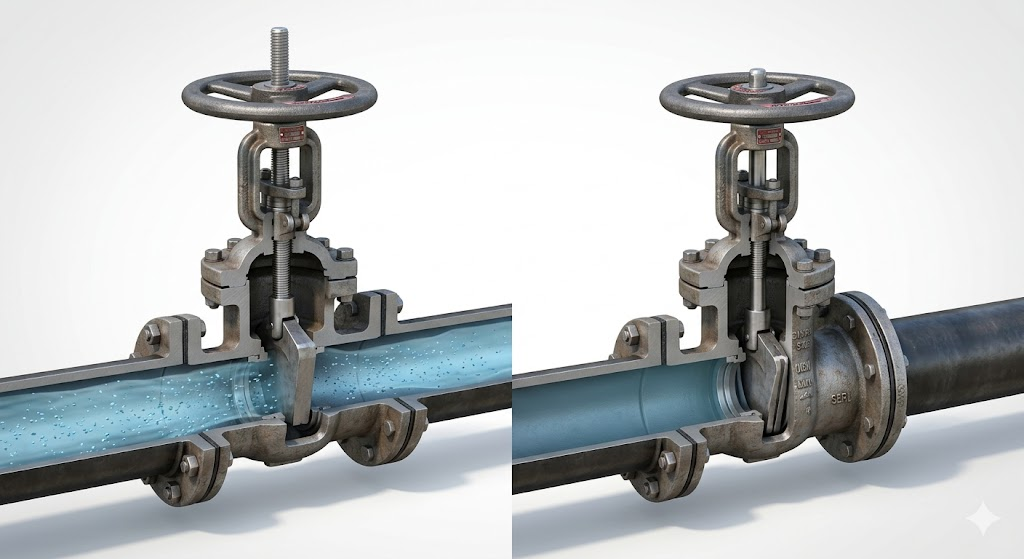
A Gate Valve, also known as a sluice valve, is a valve that opens by lifting a barrier (gate) out of the path of the fluid. Gate valves are primarily used for starting or stopping the flow of fluid. When fully open, a gate valve has no obstruction in the flow path, resulting in very low pressure loss. They are not recommended for throttling or regulating flow, as high-velocity flow against a partially open gate can cause damage to the gate and seats.
Working Principle
The gate valve works by the vertical movement of a flat or wedge-shaped plate. A threaded stem connects the handle or actuator to the gate. When the handle is turned, it moves the gate up or down. When fully down, the gate wedges between two seats, creating a tight seal to block the flow. When fully up, the gate is retracted into the valve bonnet, leaving the flow path completely clear. Our gate valves feature a precision-machined wedge for superior sealing performance.
Technical Specifications
| Size Range | 2" to 24" (DN50 to DN600) |
|---|---|
| Pressure Rating | Class 150, Class 300, PN16, PN25 |
| Material | Cast Carbon Steel (WCB), Stainless Steel, Forged Steel |
| Temperature Range | -20°C to 450°C (depending on material) |
| End Connections | Flanged, Butt-Weld |
| Design Standards | API 600, ASME B16.34, BS 1414 |